Mastering the Basics
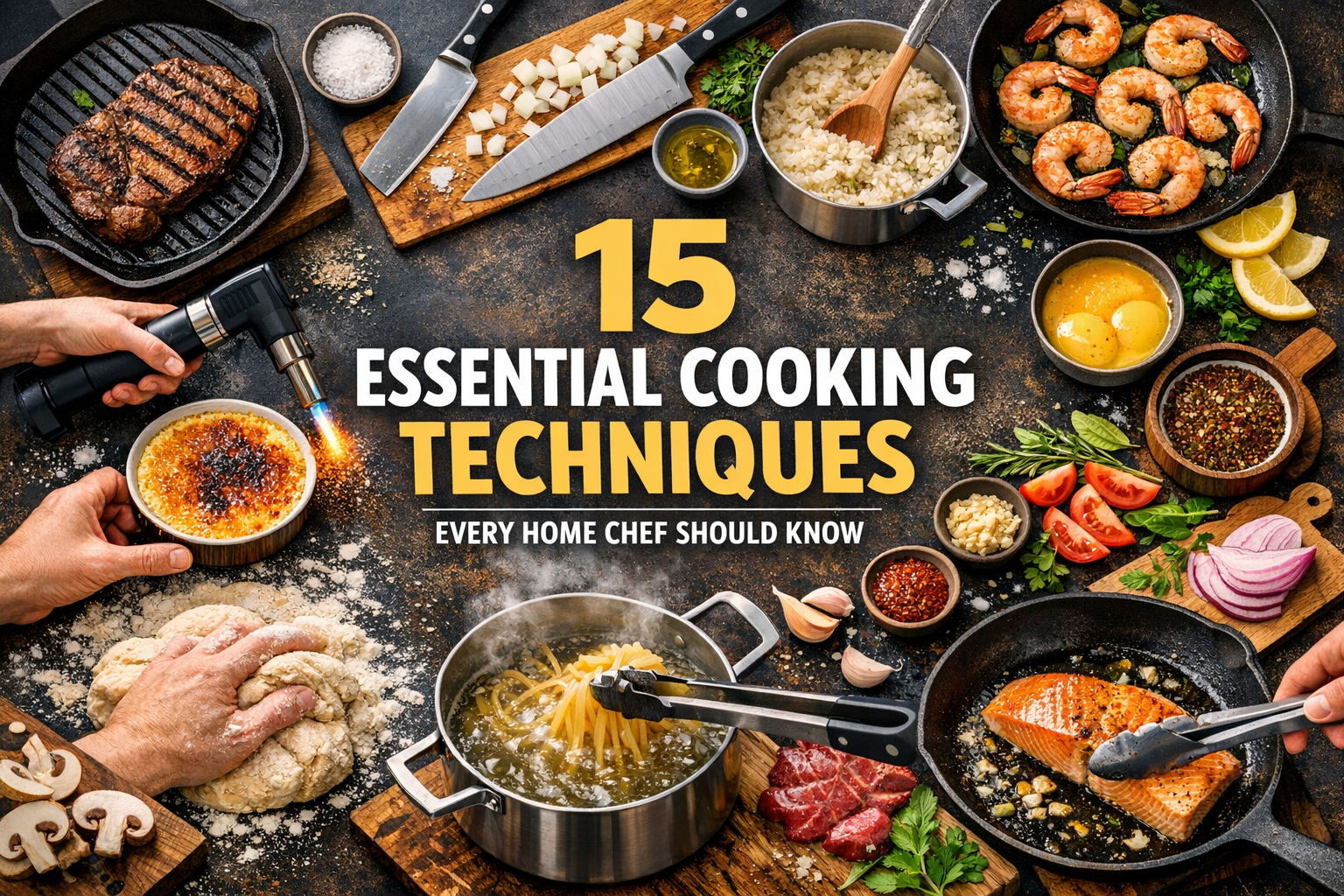
Cooking is an art and a science that begins with understanding fundamental techniques. Whether you're a novice or an experienced cook looking to refresh your skills, mastering basic cooking methods is crucial for creating delicious and consistent dishes.
1. Boiling
Boiling is one of the simplest yet most essential techniques in cooking. It involves heating water or broth until it reaches a bubbling state. Ideal for cooking pasta and blanching vegetables, boiling helps soften foods quickly.
2. Simmering
Similar to boiling, simmering involves cooking food in a liquid at a lower temperature where gentle bubbles break the surface. This technique is perfect for soups and stews, where ingredients need to blend harmoniously over time.
3. Sautéing
Sautéing involves cooking food quickly in a small amount of oil or butter over medium to high heat. This method is great for cooking vegetables, meats, and seafood, retaining their flavors and textures.
4. Grilling
Grilling imparts a distinct smoky flavor by cooking food over direct heat on a grill. Perfect for meats and vegetables, grilling is a favorite technique during barbecues and sunny days.
5. Roasting
Roasting involves cooking food at high heat in an oven, allowing it to brown and caramelize on the outside while remaining tender inside. This technique is popular for meats, poultry, and root vegetables.
6. Baking
Similar to roasting, baking uses a dry heat in an oven but at lower temperatures, suited for breads, pastries, and other desserts. Precision with temperature and timing is key to successful baking.
7. Broiling
Broiling is akin to grilling but done in an oven with the heat source from above. This method cooks food quickly at high temperatures, giving a nice char to meats and vegetables.
8. Poaching
Poaching involves cooking food gently in water or broth at a low temperature. Ideal for delicate items like eggs and fish, poaching preserves moisture and prevents overcooking.
9. Steaming
Steaming uses vapor from boiling water to cook foods, preserving nutrients and flavors. It’s a healthy cooking method often used for vegetables, seafood, and dim sum.
10. Stir-frying
Popular in Asian cuisine, stir-frying involves cooking ingredients quickly in a hot wok with a small amount of oil. This method ensures that vegetables remain crisp and meats are tender.
11. Frying
Deep frying involves submerging food completely in hot oil, creating a crispy exterior while cooking the inside. It's a technique used for making crispy fries, doughnuts, and tempura.
12. Blanching
Blanching involves briefly cooking food in boiling water followed by a quick plunge into ice water to stop the cooking process. This technique is used to enhance color, flavor, and texture.
13. Braising
Braising combines both dry and wet heats to cook food slowly at a low temperature, ideal for tougher cuts of meat. This method results in tender and flavorful dishes.
14. Reducing
Reducing entails simmering a liquid until concentrated. This technique intensifies flavors and is often used for sauces and stocks.
15. Marinating
Marinating involves soaking food in a mixture of ingredients to infuse flavor and tenderize. Commonly used for meats and tofu, this method enhances the taste profile of the dish.
Conclusion
Mastering these essential cooking techniques will expand your culinary capabilities and empower you to experiment more confidently in the kitchen. With practice, you’ll be able to prepare a wide range of dishes that are not only flavorful but also artistically presented.