Introduction
Cooking enthusiasts often find themselves faced with the challenge of interpreting recipes. While some follow them to the letter, others enjoy experimenting and making the dish their own. To successfully adapt any recipe, one must understand its core components, intended outcomes, and the flexibility it offers.
Understanding Recipe Basics
Before diving into adapting a recipe, it’s crucial to grasp its fundamentals. Recipes usually consist of an ingredient list and step-by-step instructions. The key to successful modification begins here.
Know Your Ingredients
Ingredients are the backbone of any recipe. Take time to understand the role each ingredient plays. For instance, flour is often a structural element in baking, while herbs and spices contribute to flavor. Knowing ingredient purposes allows you to swap them intelligently.
Follow Instructions Mindfully
Instructions guide you through the cooking process. Pay attention to critical steps like cooking times and temperatures. Once mastered, you can confidently adjust these elements to suit your taste or available equipment.
Identifying Recipe Elements to Adapt
Flavor Adjustments
Flavor is paramount in any dish. To tweak flavors: - **Spices:** Adjust the quantity or substitute with similar spices if some are unavailable. - **Herbs:** Fresh and dried herbs can often be used interchangeably, though in different ratios.
Dietary Modifications
Adapting recipes for dietary needs is common. Replace dairy with plant-based alternatives, or swap meat for legumes to accommodate vegetarian preferences.
Portion Size
You might need to alter the recipe’s yield: - **Scaling Ingredients:** Double or halve the quantities based on desired servings, but maintain the ratio for a balanced outcome.
Techniques for Recipe Modification
Experimenting with Cooking Methods
Different cooking techniques can drastically change a dish’s texture and flavor: - **Baking vs. Frying:** Baking is healthier, while frying can intensify flavors through caramelization. - **Sautéing vs. Steaming:** Choose based on desired texture and flavor intensity.
Utilize Substitutes
Knowing suitable substitutes can save a recipe: - **Yogurt for Sour Cream:** Offers a similar texture and tang. - **Applesauce for Oil in Baking:** Reduces fat content while maintaining moisture.
Trouble-Shooting Common Issues
Sometimes, adaptations don't go as planned. Here’s how to resolve common issues:
Too Salty or Spicy
- **Solution:** Dilute with additional base ingredients like broth or cream.
Overcooked or Undercooked
- **Solution:** Adjust cooking time and use a thermometer to ensure accuracy.
Refining Your Adaptation Skills
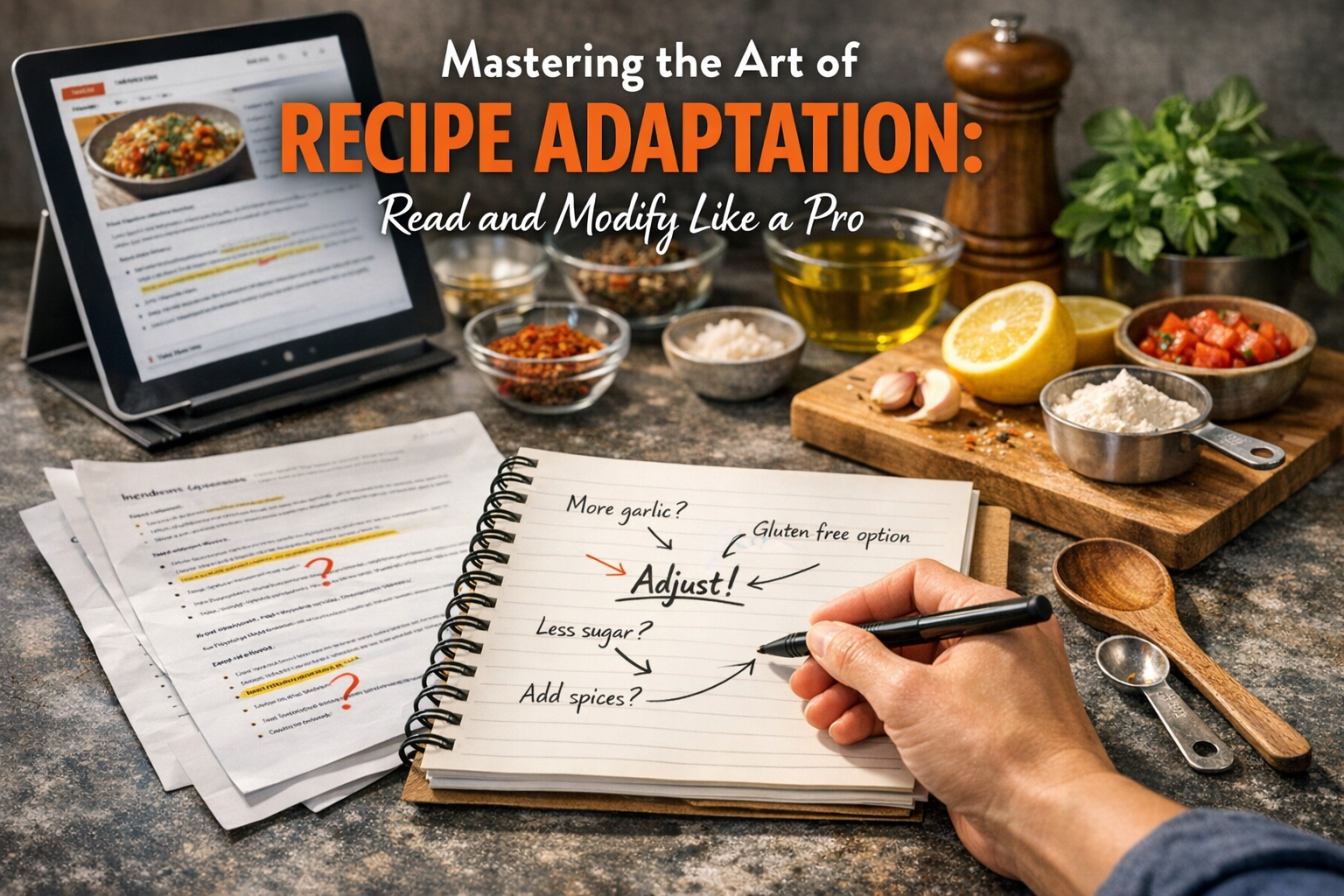
The more you practice adapting recipes, the more intuitive it becomes. Keep a journal to note what modifications work or need improvement. Experiment with flavors, but also trust tried-and-true combinations.
Conclusion
Adapting a recipe is both a science and an art. By understanding the recipe fundamentals and utilizing creative modifications, you can create personalized dishes that cater to your tastes or dietary needs. With practice and experimentation, you’ll read and adapt any recipe with the confidence of a professional chef.